
main products
Refractory bricks, refractory castables, refractory cement, thermal insulation cotton

English
- All
- Product Name
- Product Keyword
- Product Model
- Product Summary
- Product Description
- Multi Field Search
 |


Product Description
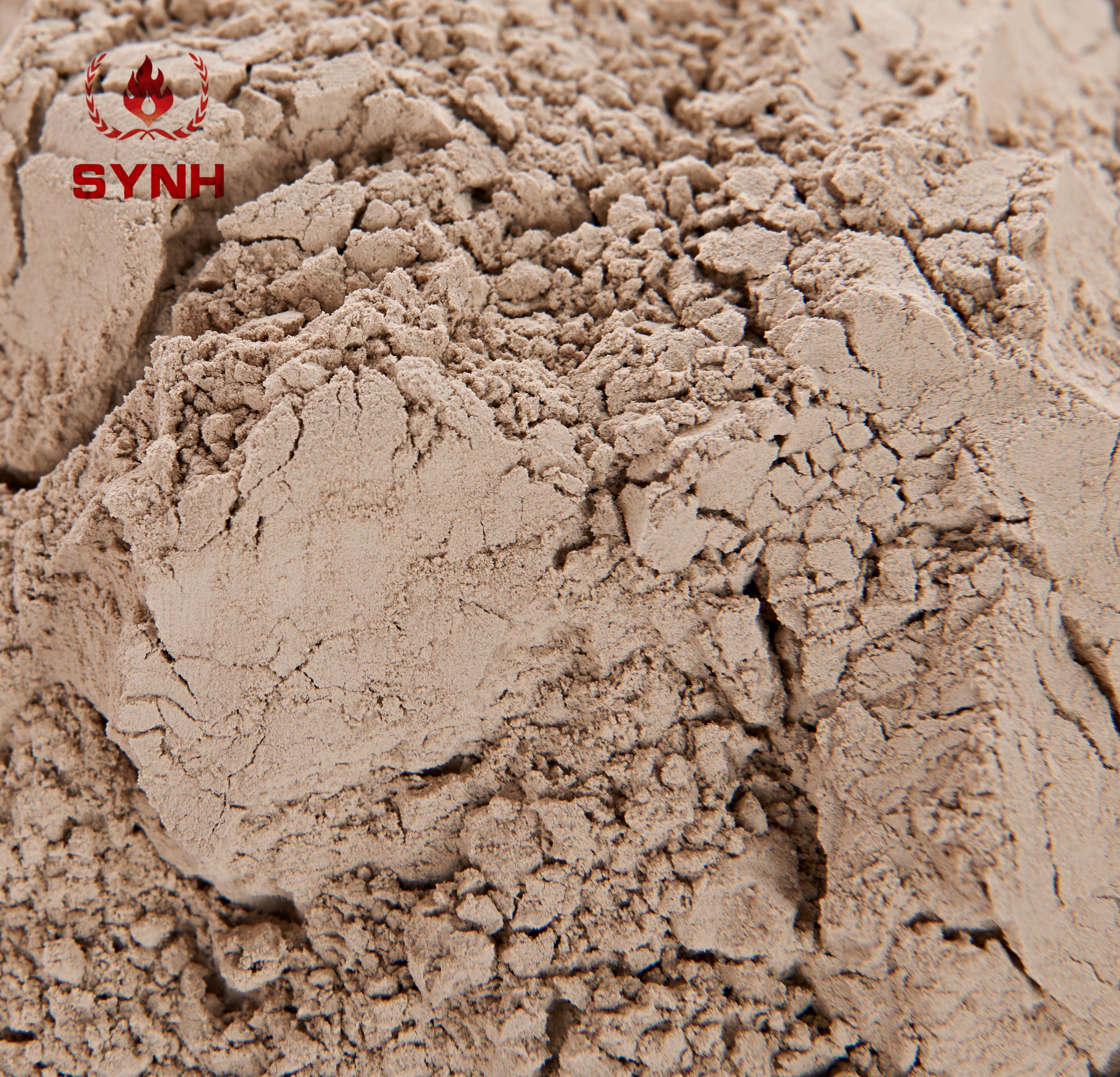
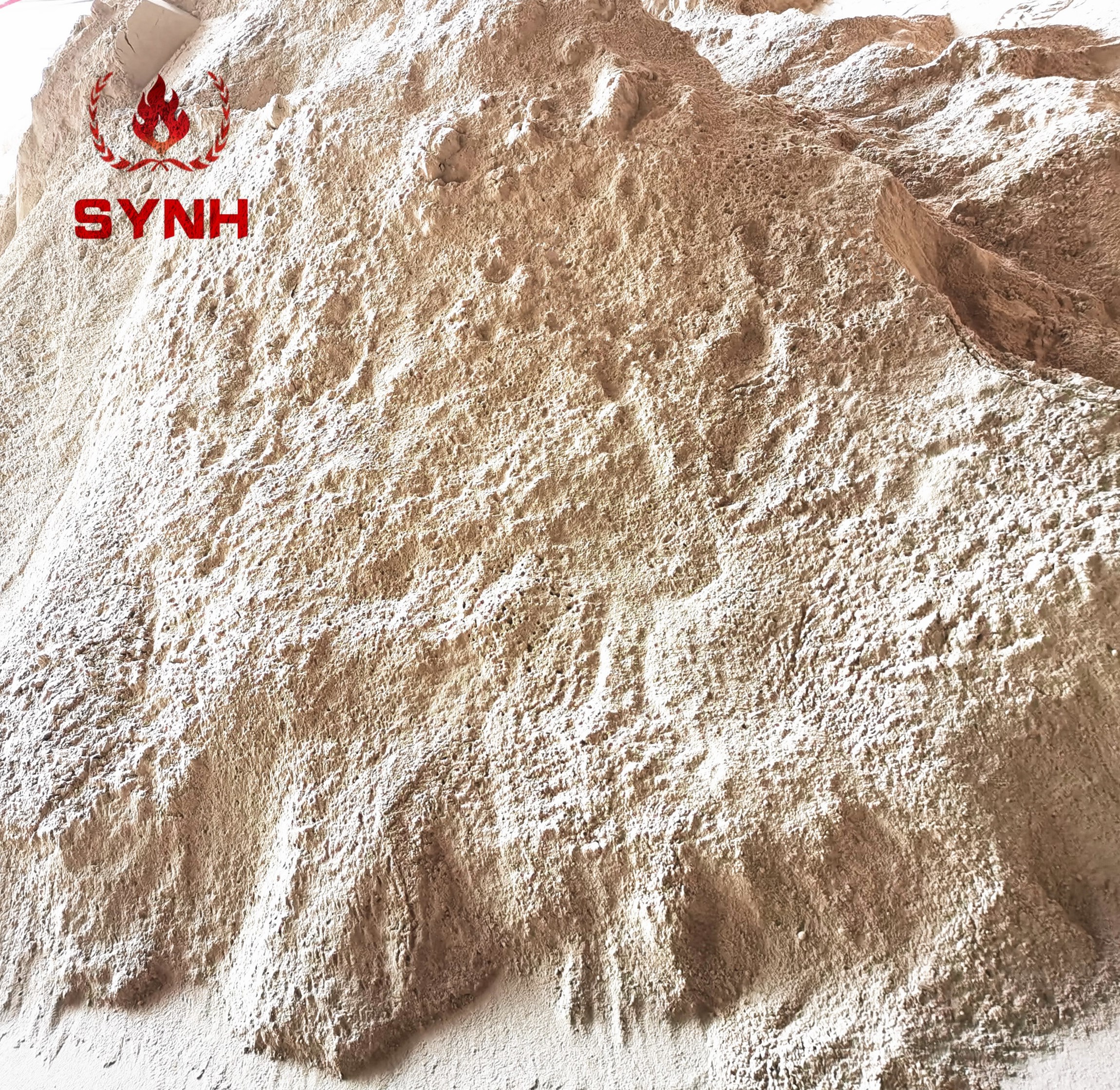
It is composed of refractory powder, binder and admixture.Almost all refractory raw materials can be made into powder used to prepare refractory mud.The ordinary refractory clay made of refractory clinker powder and an appropriate amount of plastic clay as a binder and plasticizer is called ordinary refractory clay.The chemically bonded refractory clay, which uses hydraulic, air-hardened or thermosetting bonding materials as the bonding agent, undergoes a certain chemical reaction and hardens before it is lower than the ceramic bonding temperature.
The particle size of refractory mud varies according to the requirements of use, and its limit particle size is generally less than 1mm, and some are less than 0.5mm or finer.
Characteristics and application of refractory clay:
1. Good plasticity and convenient construction;
2. High bonding strength and strong corrosion resistance;
3. High refractoriness, up to 1550℃±50℃;
4. Good resistance to slag invasion;
5. Good thermal exfoliation.Refractory mud is mainly used in coke ovens, glass furnaces, blast furnace hot blast furnaces, and other industrial furnaces.
The applied industries are: metallurgy, building materials, machinery, petrochemicals, glass, boilers, electric power, steel, cement, etc.
Refractory mud physical and chemical properties | ||||||
Material | Clay | High aluminum | Corundum | Special high-strength mud | ||
1# | 2# | |||||
chemical composition | AL2O3 ≥ | 40 | 70 | 88 | 73 | 83 |
Flexural strength (MPa) | 110℃×16h≥ | 1.0 | 1.2 | 1.5 | 3.0 | 3.5 |
1450℃×3h≥ | 5 | 6 | 6 | 9 | 11 | |
Refractoriness (℃)≥ | 1550 | 1690 | \"1790 | 1790 | \"1790 | |
Setting time (minutes) | 1-2 | 1-2 | 1-2 | 1-2 | 1-2 | |
use | Suitable for refractory materials of various materials | |||||
characteristic | Air hardness | |||||

